
TERMITE HELP IN LAND O’ LAKES AND PASCO COUNTY
Found a Mud Tube, Damaged Wood, or a Pile of Wings?
Do not tear everything open yet. Photograph what you found and have the structure checked before deciding what it means.
Call About Possible TermitesTermite evidence can be small even when the activity is not.
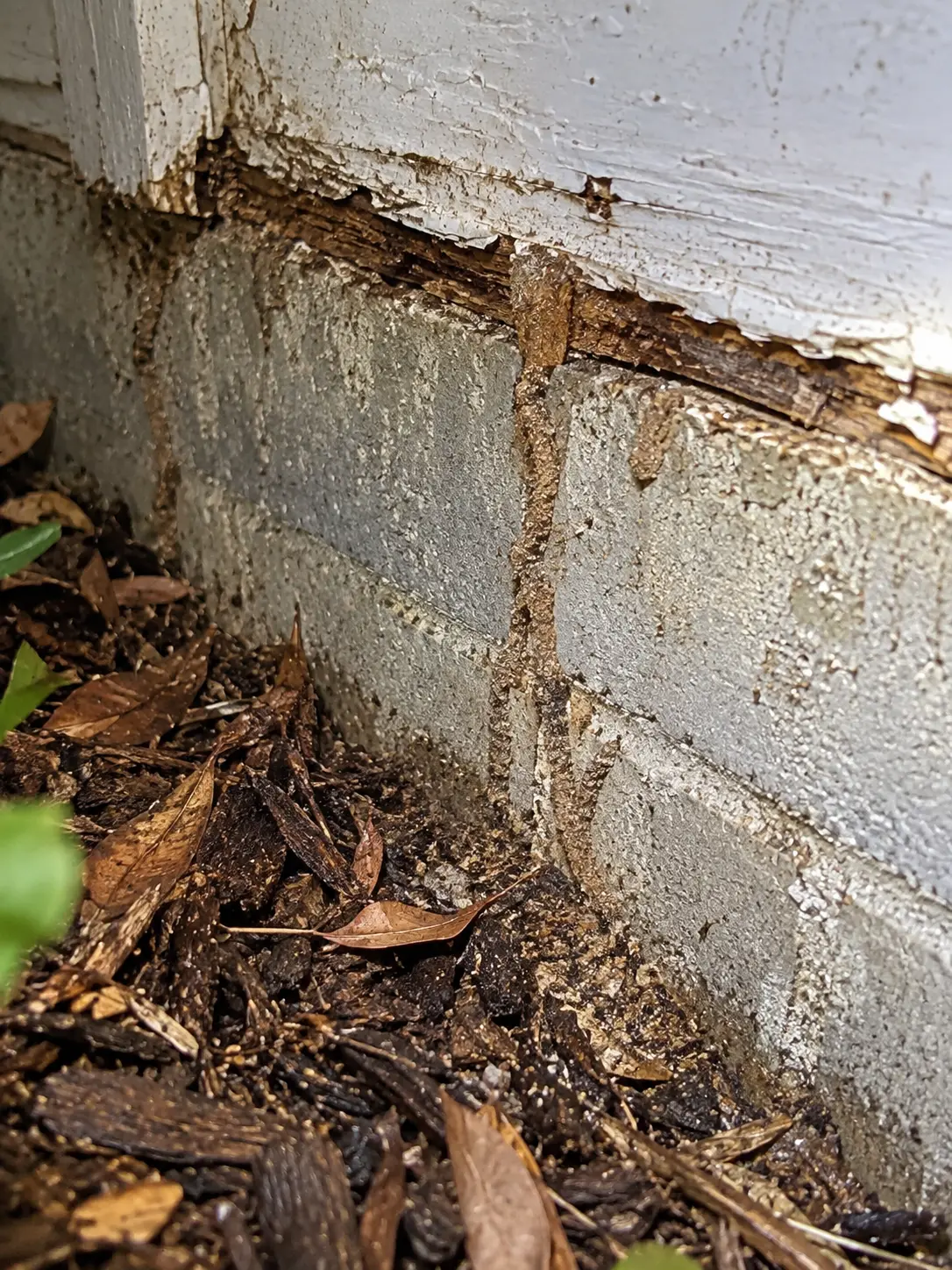
Subterranean termites can travel from soil into a structure through narrow mud tubes, hidden joints, cracks, and places where wood or moisture stays close to the ground. Drywood termites live inside wood and may leave small pellets or discarded wings. The treatment choices are different, so the first job is identifying the evidence and extent.
Peeling trim, a soft window frame, or damaged siding can also come from water, rot, or another wood-destroying organism. Photos are helpful, but no responsible answer should declare the entire problem from one image.
Land O’ Lakes homes may have block walls, slab construction, screened additions, wood trim, attached garages, patios, mulch beds, and irrigation close to the foundation. Those details affect where evidence may show and what needs to be accessible for inspection.
PRESERVE WHAT YOU FOUND
Evidence worth photographing before it is cleaned away
Mud lines on block, slab edges, or wood
Take a close photo and another showing the wall or room. Do not scrape every tube away. One small break may be useful for checking whether it is rebuilt.
Wings or swarming insects near windows
Save a few insects or wings in a sealed bag if possible. Ant swarmers and termite swarmers can look similar from across the room.
Pellets, hollow wood, or bubbled paint
Mark the spot and check above and below it for leaks. These signs can have more than one cause and should be viewed in context.

INSPECTION BEFORE TREATMENT
The treatment should match the termite and the structure.
A termite inspection looks at accessible areas, foundation edges, moisture conditions, wood contact, additions, attic or garage areas when relevant, and the evidence that prompted the call. Hidden areas cannot be made visible by wishful thinking, so access and limitations should be explained clearly.
Subterranean termite work may involve a soil or structural treatment, a baiting approach, or another method appropriate to the building and activity. Drywood termite options depend on where the colony is located and how widespread the evidence appears.
Correcting leaks, wood-to-soil contact, heavy mulch against the wall, or irrigation hitting the structure does not replace treatment when termites are active. Those changes reduce conditions that make inspection and long-term control harder.
What to have ready for a termite visit
The goal is access to the evidence and the structure, not a perfectly staged house.
Keep photos and samples
Do not vacuum every wing or pellet before taking pictures. A small sealed sample can help when the insect itself is no longer active.
Point out additions, leaks, and past treatment
A converted porch, repaired wall, plumbing leak, prior termite contract, or old drill marks can change what the inspector needs to check.
Know whether you need an inspection or a WDO report
A treatment inspection and a formal wood-destroying organism inspection for a real-estate transaction are related but not interchangeable.
Termite questions after you find something suspicious
What to preserve, what not to assume, and when paperwork changes the inspection.
Should I break open a termite mud tube?
Photograph it first. Opening a small section may help show whether activity returns, but removing all evidence can make the inspection harder. Leave the surrounding area intact.
Are flying ants and termites easy to tell apart?
They have different body shapes, antennae, and wing proportions, but those details are hard to see while insects are moving. Save a sample or send a close photo.
Does termite damage always look hollow?
No. Damage can be hidden behind paint, drywall, trim, flooring, or siding. Softness, blistering, pellets, wings, and mud tubes may be clues, but an inspection is needed.
Can mulch cause termites?
Mulch does not create termites, but deep or damp mulch against the structure can hide foundation edges and hold moisture where inspection is harder. Keep the edge visible.
Is a termite inspection the same as a WDO inspection?
No. A WDO inspection follows formal reporting requirements and covers visible evidence of more than termites. Say whether the inspection is for a sale, refinance, treatment concern, or general peace of mind.
Can a concrete block home get termites?
Yes. Termites can travel through cracks, joints, utility openings, and hidden paths to reach wood, trim, roof framing, cabinets, or other cellulose materials.
Photograph the evidence before you disturb it.
Tell us where it is, whether you found wings, tubes, pellets, or damaged wood, and whether the property needs a formal WDO report.
Call About Possible Termites